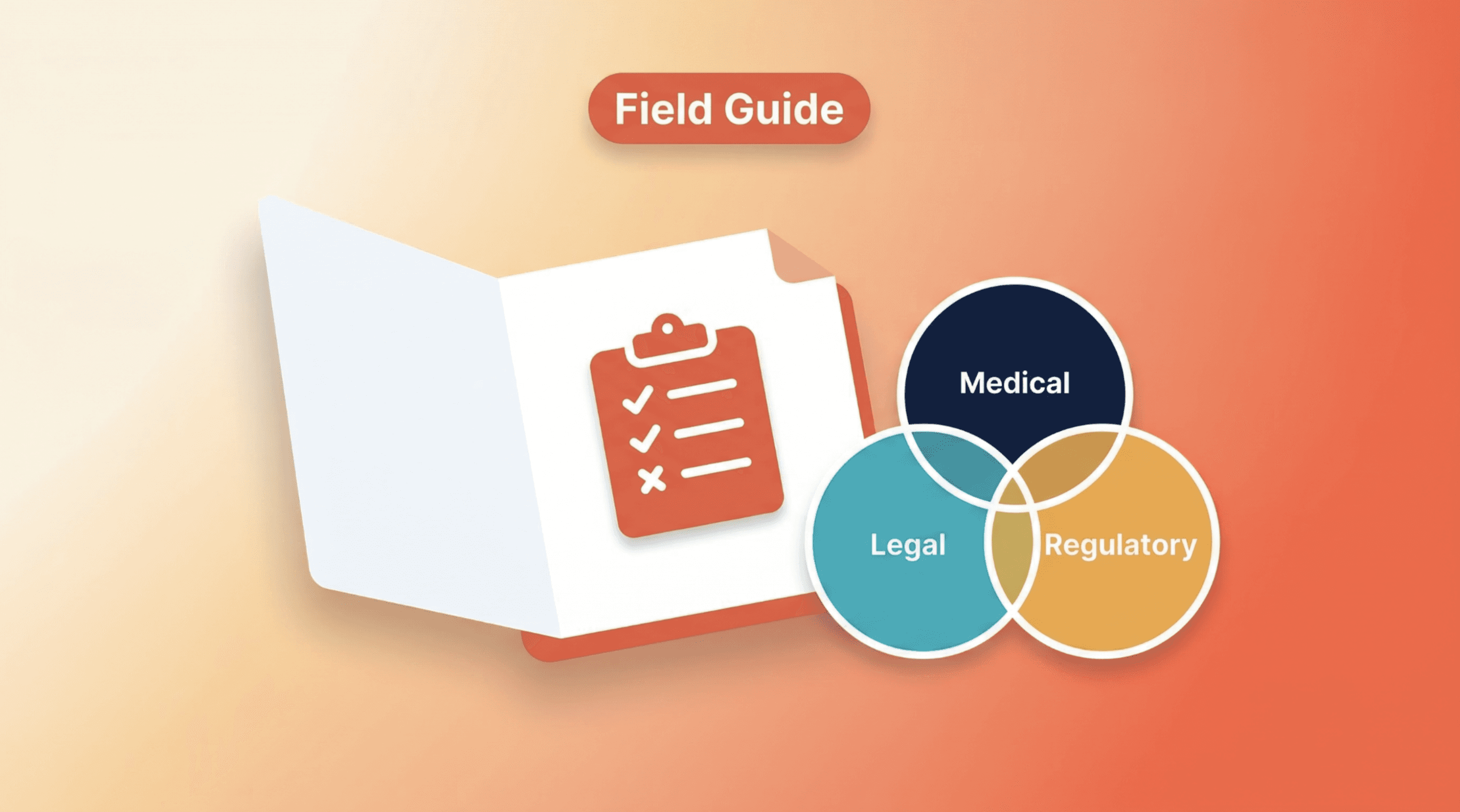
Key Takeaways Medical legal regulatory review is a mandatory, multi-stakeholder approval process that governs every piece of promotional content a pharma company publishes, and understanding it is essential for any commercial or brand team trying to move at speed.
Commercial teams that understand the mechanics of the MLR review process consistently produce fewer revision cycles and get more content approved on time. |
|---|
For most commercial and brand teams in pharma, medical legal regulatory review is experienced as an obstacle rather than a process. Materials go in, feedback comes back weeks later, and the reasons for each comment can seem opaque to anyone outside the MLR function. That friction is expensive: review cycles can add weeks to a campaign launch, and organizations running multiple brands at once often find their entire content calendar stalled behind a compliance queue. Understanding how the medical legal regulatory review process actually works, from submission to approval, is the first step toward compressing those timelines without introducing compliance risk.
This guide is written for marketing, commercial, and brand professionals who interact with the MLR review process regularly but may not have full visibility into its structure, stakeholders, or the specific compliance categories each review covers. The FDA's Office of Prescription Drug Promotion actively monitors pharmaceutical marketing across every asset format, from TV spots to social media posts, making the promotional review process one of the most consequential internal workflows in the industry.
What Is Medical Legal Regulatory Review?
Medical legal regulatory review, commonly called MLR review or the promotional review process, is the formal internal approval workflow pharmaceutical companies use before any promotional or educational content reaches physicians, patients, or caregivers. Every asset class goes through it: digital ads, sales aids, patient brochures, website copy, social media posts, conference materials, and email campaigns. The scope is broad because the regulatory stakes are correspondingly high. Companies that publish non-compliant content face untitled or warning letters, mandatory corrective campaigns, and in serious cases, enforcement actions that collectively have cost the pharmaceutical industry billions of dollars.
The process exists because promotional content in pharma operates under fundamentally different standards than advertising in virtually every other industry. Claims must be substantiated by clinical evidence. Risk disclosures must be prominent and balanced. Any statement about a drug's mechanism, efficacy, or safety profile is subject to regulatory scrutiny. Medical legal regulatory compliance provides the internal governance structure that ensures those standards are met before anything is published.
The Three Reviewers and What Each One Evaluates
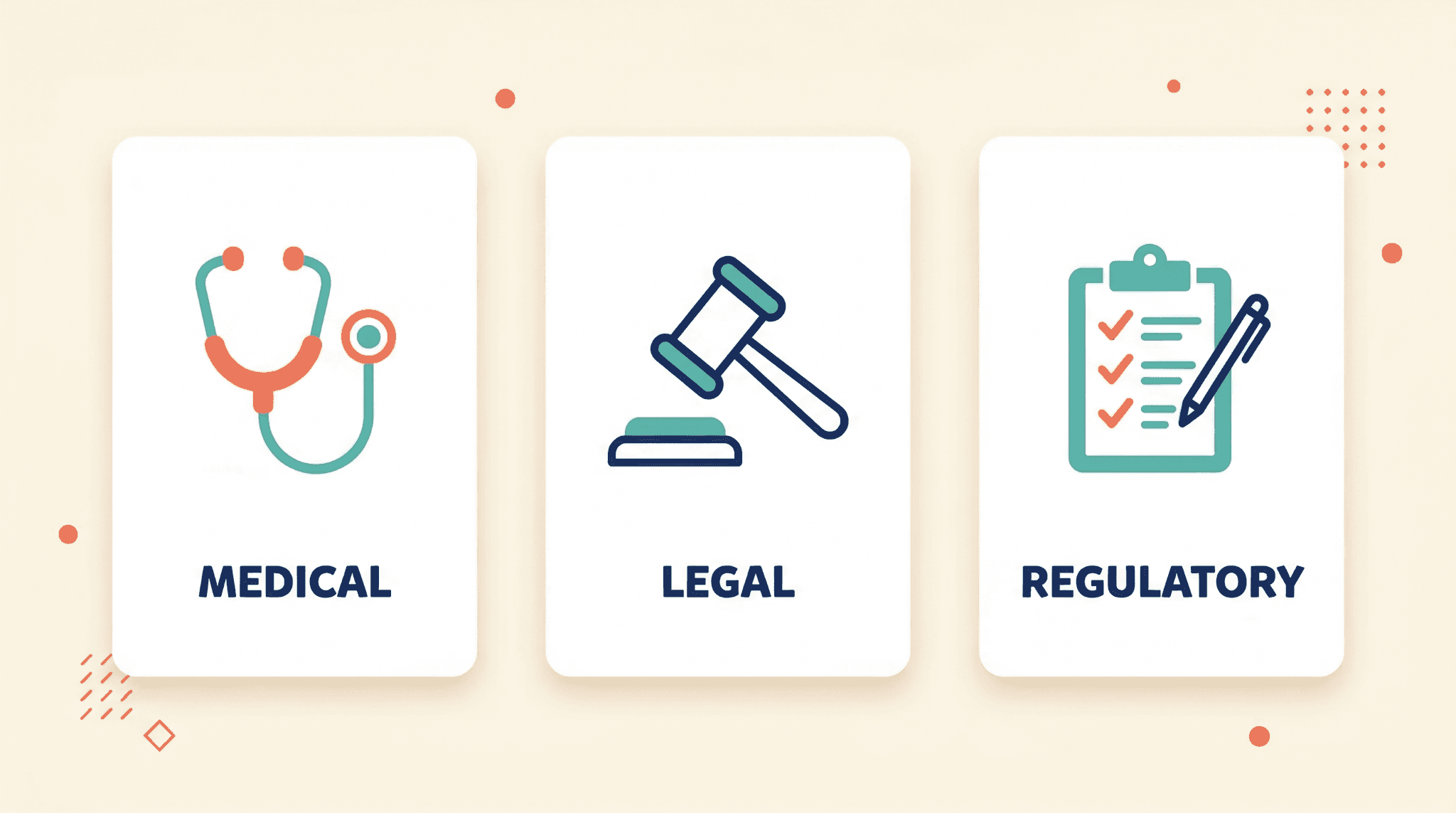
While the exact structure varies by company, the promotional review process typically involves three core functions, each focused on a different dimension of compliance:
Medical Affairs: Verifies the scientific and clinical accuracy of all claims. Medical reviewers check that every assertion about a drug's efficacy, mechanism of action, dosing, or adverse event profile is supported by approved label language or peer-reviewed clinical evidence. This function also ensures that off-label content does not appear in promotional materials.
Legal: Assesses liability exposure. Legal reviewers evaluate whether claims could create false impressions, whether intellectual property is properly handled, and whether content complies with applicable advertising law and any existing corporate integrity agreements.
Regulatory Affairs: Ensures alignment with FDA promotional regulations, labeling requirements, and applicable global standards such as EMA guidelines for companies operating in multiple markets. Regulatory reviewers also manage the process of submitting materials to the FDA under Form 2253 where required.
These functions may operate sequentially or in parallel depending on the company's workflow, asset urgency, and submission complexity. Sequential review tends to be slower but produces cleaner comment integration; parallel review is faster but requires careful coordination to avoid conflicting feedback.
What Does the Medical Legal Regulatory Review Process Actually Cover?
Commercial teams often assume that MLR review focuses primarily on major clinical claims, the kind that appear in a headline or a direct-to-consumer TV spot. In practice, the medical legal regulatory review process addresses five distinct compliance categories, each of which can generate substantive feedback that requires revision before approval.
The Five Review Categories
Review Category | What It Evaluates | Common Causes of Rework |
|---|---|---|
Regulatory Compliance | Alignment with FDA, EMA, and regional promotional standards | Off-label implications, missing ISI, outdated label language |
Claim Substantiation | Clinical evidence support for every efficacy and safety statement | Insufficient citations, secondary data used as primary support, Unapproved brand claim |
Fair Balance | Proper disclosure of risks, side effects, and contraindications | Benefit-risk imbalance, inadequate prominence of risk language |
Editorial & Brand Guidelines | Grammar, trademark use, brand voice consistency, visual accuracy | Spelling & Grammar, Brand visuals and voice deviations |
Market & Channel Compliance | Channel-specific rules, local market SOPs, congress and digital guidelines | Digital channel rules not applied, region-specific requirements missed |
Understanding which category a comment originates from helps commercial teams triage feedback more effectively. A medical comment about claim substantiation requires clinical evidence to resolve; an regulatory comment about trademark usage requires a simple text correction. Routing the wrong comments to the wrong stakeholders is one of the most common causes of unnecessary revision cycles in the promotional review process.
Where Does the Promotional Review Process Break Down?
Lengthy review cycles and frequent rework are among the most consistently cited operational challenges in pharma marketing. A peer-reviewed analysis of FDA enforcement patterns published in Pharmaceut Med found that insufficient risk information presentation was the most frequent promotional violation across a 15-year observation period, which helps explain why fair balance issues alone generate so much MLR feedback and why revision rounds compound even on well-prepared submissions. Understanding the structural causes of delay, rather than treating slow cycles as inevitable, is where brand and commercial teams can have the most impact.
The Most Common Bottlenecks
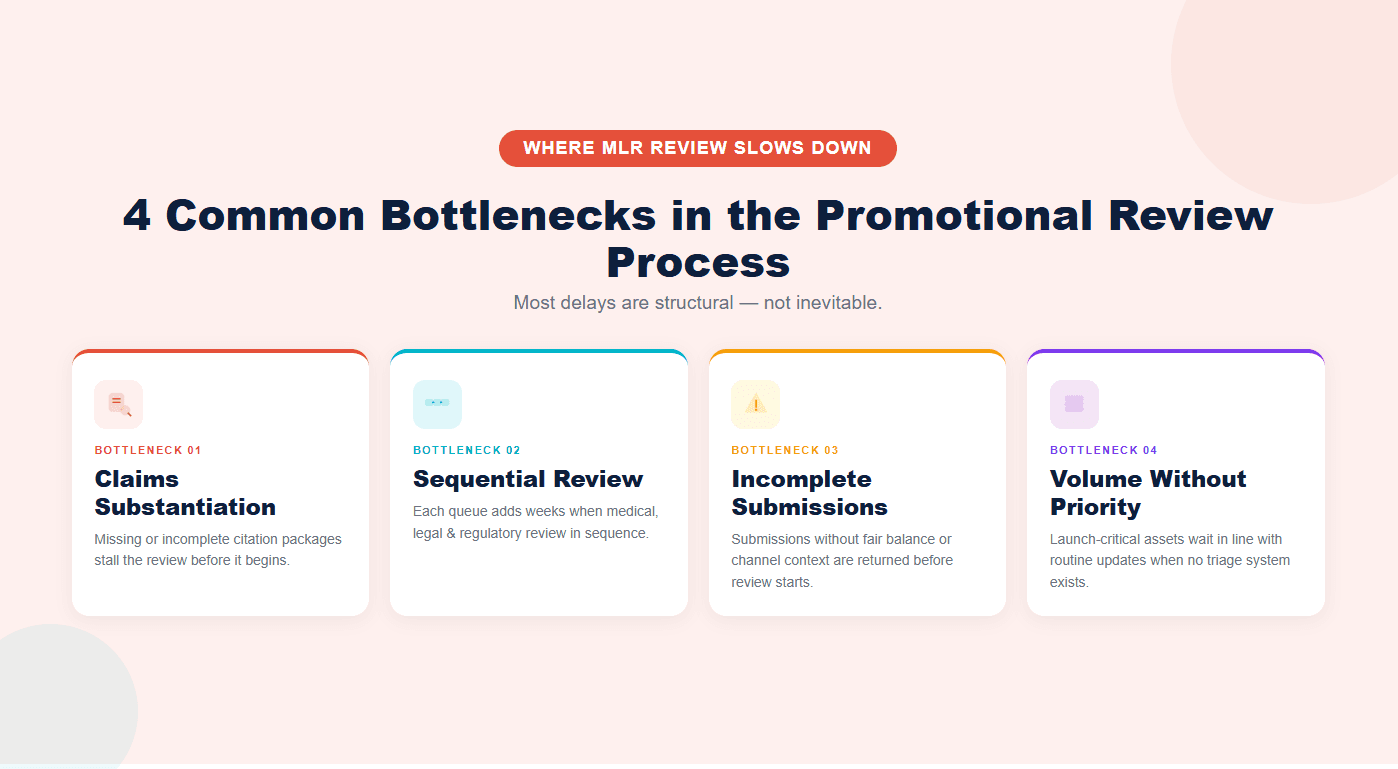
Claims substantiation delays: Claims substantiation is consistently the longest-running bottleneck in the medical legal regulatory review process. If a submission arrives without complete citation packages, or with citations that reference secondary publications rather than primary clinical data, medical reviewers must pause the cycle while the marketing team locates the supporting evidence. This single issue accounts for a disproportionate share of total review time at most organizations.
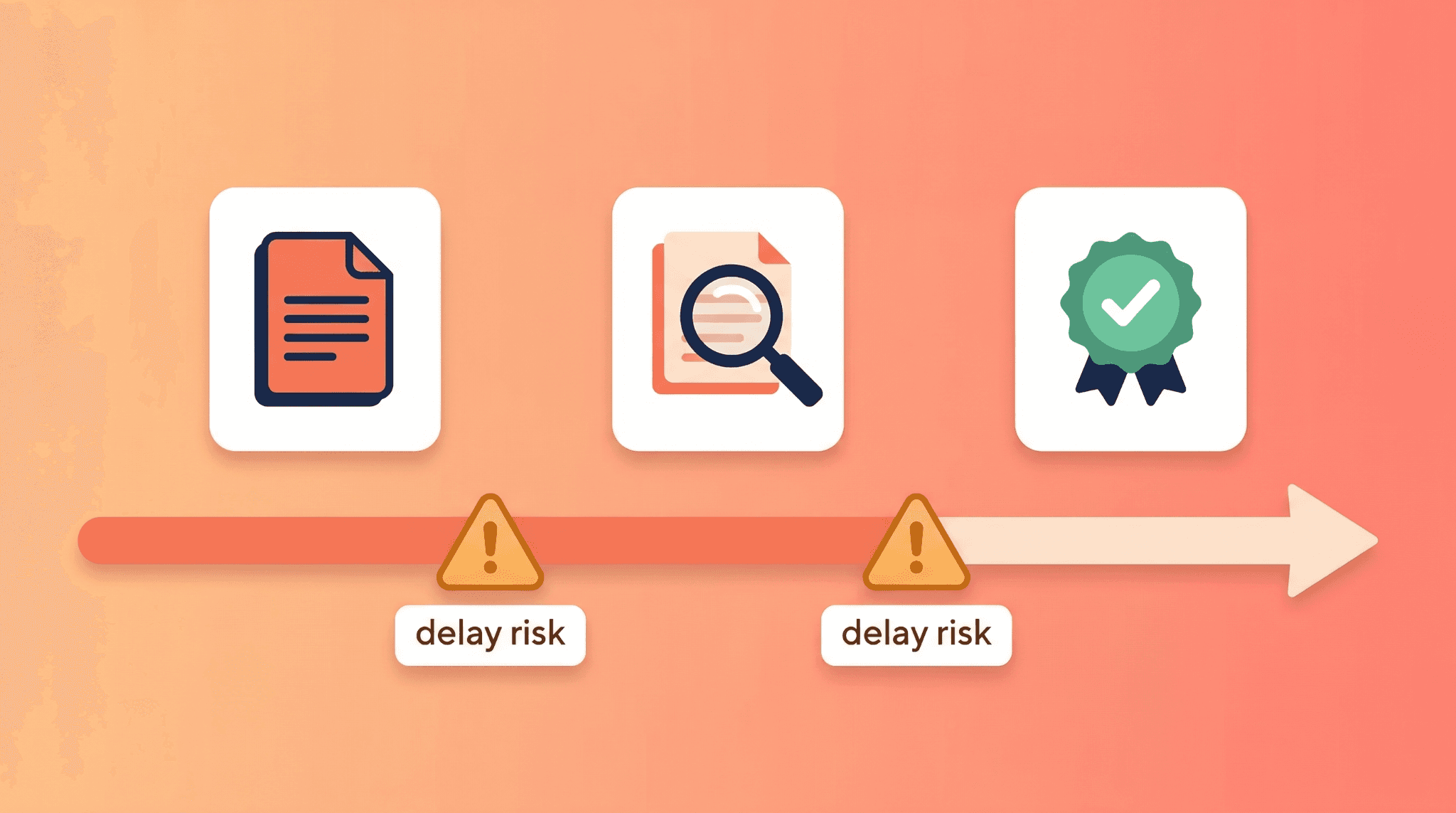
Sequential review structure: When medical, legal, and regulatory reviewers work in sequence, total cycle time is the sum of all three queues. A medical review that takes two weeks, followed by legal at ten days, followed by regulatory at one week, produces a five-to-six-week cycle before a single revision round is factored in. Companies that have moved to concurrent or parallel review structures typically report significant compression of their overall cycle time.
Incomplete submissions: Submissions missing annotated references, fair balance treatment, or channel deployment context often receive administrative return before substantive review even begins.
Volume without prioritization: As content volume grows, MLR teams without a triage system process submissions in order of receipt rather than business priority. A launch-critical campaign waits in the same queue as a routine website refresh. Working with MLR operations to establish priority tiers for submissions is one of the most actionable steps commercial teams can take.
5 Ways Commercial Teams Can Improve Medical Legal Regulatory Compliance From the Start
Most delay in the MLR review process originates upstream, before a submission ever reaches a reviewer. Commercial and brand teams that invest in submission quality consistently see faster cycles and fewer revision rounds.
Build and maintain a pre-approved claims library. A library of claims that have already cleared medical legal regulatory review, mapped to the clinical evidence supporting each one, dramatically reduces substantiation delays. Writers draw from approved language, and reviewers spend less time re-evaluating evidence they have already cleared.
Submit complete packages from the start. Every submission should include the final asset, annotated reference list, fair balance treatment, and intended channel deployment detail. Incomplete submissions are the single most controllable cause of administrative delays in the promotional review process.
Engage MLR stakeholders early in the creative process. Involving medical or regulatory advisors at the concept or brief stage surfaces compliance issues before they are designed around. A messaging workshop that includes a medical affairs representative is far less costly than a revision round on a finished production.
Understand which review category each comment comes from. Feedback from a legal reviewer and feedback from a medical reviewer require fundamentally different resolution paths. Categorizing comments by function when they arrive helps route them to the right internal owner without delay.
Track revision patterns to identify systemic issues. If the same claim type consistently generates feedback, or a specific asset format always requires a second round, the underlying cause is almost always process-level rather than content-level. Documenting revision patterns creates the data needed to address root causes rather than symptoms.
Who Is Actually Involved in the MLR Review Process?
Knowing what each reviewer evaluates is one thing. Knowing who else is in the room — and what commercial teams can do to work with each of them — is what actually moves submissions forward.
Beyond the three core review functions, a mature MLR operation includes dedicated project management roles, brand team owners, and agency partners, each with a distinct part to play in keeping the cycle on track. A breakdown of how marketing operations roles keep the content review cycle moving is a useful reference for anyone building a working understanding of how these pieces fit together.
The Stakeholder Map: Who Is in the Room
Stakeholder | Primary Role in MLR | What Commercial Teams Can Do |
|---|---|---|
Medical Affairs Reviewer | Validates clinical accuracy and claim substantiation | Provide complete citation packages; flag any new clinical data being used for the first time |
Legal Reviewer | Assesses liability, IP, and advertising compliance | Clarify intended channel and audience upfront; note any relevant licensing or indemnity considerations |
Regulatory Affairs Reviewer | Ensures FDA/EMA alignment; manages Form 2253 submissions | Confirm product indication scope; flag global market deployment requirements early |
MLR Operations / Project Manager | Routes submissions, tracks status, manages timelines | Submit complete packages; communicate launch priority and hard deadlines |
Marketing / Brand Team | Develops content; resolves feedback; manages agency partners | Own the annotation process; maintain the claims library; brief agencies on MLR standards |
Agency Partners | Produce creative assets; manage revision rounds | Provide annotated drafts from the start; understand fair balance requirements before production |
One of the more persistent structural challenges in the MLR review process is that the stakeholders who own content quality, commercial and brand teams, are rarely the same as those who govern the review timeline. Building strong working relationships with MLR operations leads is often more impactful than any individual submission improvement. For a closer look at how individual reviewer roles operate in practice, see these overviews of the regulatory reviewer's function in MLR and the medical reviewer's role in the promotional review process, both useful references for commercial teams building a working understanding of MLR operations.
FAQ
What is the difference between MLR review and the promotional review process?
The terms are largely interchangeable in common usage. MLR review refers specifically to the Medical, Legal, and Regulatory functions involved, while the promotional review process describes the broader operational workflow those functions participate in. Some companies include additional reviewers such as market access, patient safety, or compliance, in which case the workflow expands beyond the core three. Most commercial professionals use both terms to mean the same thing.
How long does a typical medical legal regulatory review process take?
At most mid-to-large pharmaceutical companies, a complete review cycle can run anywhere from a few weeks to several months depending on asset complexity, submission completeness, and whether review is structured sequentially or in parallel. Materials involving significant new clinical data, multiple global markets, or novel digital formats tend to take longer. Organizations with mature MLR operations and concurrent review workflows frequently report meaningfully compressed cycle times for straightforward asset types.
Why does claims substantiation slow down medical legal regulatory compliance?
Claims substantiation requires medical reviewers to verify that every efficacy or safety assertion is directly supported by approved clinical evidence, typically the product's prescribing information or published trial data. When the citation package is incomplete, or when citations reference secondary publications rather than primary clinical data, the review stalls while the commercial or agency team locates the missing support. Organizations that maintain a dynamic, pre-approved claims library can reduce substantiation review time significantly.
Does the MLR review process apply to digital content and social media?
Yes, and broadly. The FDA's oversight extends to branded digital content including websites, paid social advertising, banner ads, email campaigns, and certain forms of organic social posting. Channel-specific rules also apply: the requirements for a sponsored post targeting healthcare professionals differ from those for a direct-to-consumer display ad. The market and channel compliance category within the MLR review process addresses these variations specifically, and it is one of the areas where commercial teams most commonly lack visibility until a review comment arrives.
What types of content always require a full medical legal regulatory review?
Any content that makes a promotional claim about a prescription drug, whether explicit or implied, requires full MLR review before publication. This includes sales aids, branded patient materials, speaker event content, journal ads, healthcare professional digital campaigns, disease state awareness content with brand attribution, and direct-to-consumer advertising. Internal training materials and purely scientific communications may have modified review pathways depending on company SOPs, but the threshold for triggering a full promotional review process is often lower than commercial teams expect.
Getting Faster at MLR Review Starts With Understanding It
The gap between commercial teams and MLR functions is rarely intentional. It is structural. Reviewers evaluate risk using criteria that are often invisible to the brand teams submitting work.
When commercial teams understand the five compliance categories, the full stakeholder map, and the most common delay points in the medical legal regulatory review process, they are better positioned to build submissions that move faster and require fewer revision rounds. The goal is not to work around medical legal regulatory compliance. It is to arrive at compliant, high-quality content without burning the launch calendar in the process.
That is the exact problem Revisto is built to solve. Revisto's AI-powered platform works alongside MLR teams, surfacing compliance issues before formal submission, accelerating claims substantiation, and integrating directly into existing workflows through both Revisto Studio and Revisto Companion for Veeva Vault PromoMats. If your organization is looking to reduce review cycle times and bring more consistency to your promotional review process, reach out to the Revisto team to see what AI-assisted review looks like in practice.